Most mobile valeters get their pricing wrong. Not catastrophically wrong. Just quietly, consistently wrong, in a way that costs them thousands over the course of a year without them ever realising it.
Some undercharge because they set their prices when they first started and never revisited them. Some copy whatever the nearest competitor is charging without understanding the cost structure behind those numbers. And a significant number price their services based on what a hand car wash charges, because that is the only reference point their customers have.
The result is the same in every case: long hours, full calendars, and surprisingly little profit to show for it.
At Automate, we work with over a hundred mobile valeting and detailing businesses across the UK. We see what they charge, what their customers actually book, and how those numbers translate into revenue over time. We recently sampled some of that data, covering around ten thousand recent bookings made through the Automate platform, and the patterns are clear.
This guide is built on what the data actually says, not guesswork or generic advice. Whether you are setting prices for the first time or wondering if you are charging enough, this is the framework that works.
The Car Wash Problem
Before we get into the numbers, there is something important to understand about how your customers think about pricing.
A significant number of people who book a mobile valeter for the first time have never used one before. Their only frame of reference for having a car cleaned is the £10 hand car wash on the retail park, or the £7 drive-through jet wash at the petrol station. That is the mental anchor they bring with them when they look at your prices.
When they see a Mini Valet at £45 or a Full Valet at £110, their first reaction is often sticker shock. Not because your prices are unreasonable, but because they are comparing a professional, at-your-door service with a five-minute rinse from a stranger with a sponge.
This is not a pricing problem. It is a communication problem. And solving it is one of the most important things you can do for your business.
Your booking page, your website, and your social media all need to make the distinction clear. You are not a car wash. You are a professional service that comes to the customer, uses specialist products, takes genuine care of their vehicle, and delivers results that a car wash simply cannot. The more clearly you communicate that, the less resistance you will get on price.
Design Your Packages Around the Customer Journey
The biggest mistake we see with pricing is not charging too much or too little. It is offering the wrong packages.
Too many valeters list five or six services at similar price points with overlapping descriptions, and expect the customer to figure out which one they need. The customer does not know what a "Silver Plus Hybrid Ceramic Wax" is. They do not know the difference between your Bronze and your Gold package. When they cannot tell the difference, they either pick the cheapest option or they leave.
The most successful businesses on Automate use a simple tiered structure. Three core packages, clearly differentiated, with a logical step up between each one. Think of it as a ladder.
The entry-level service is your Mini Valet, your Exterior Wash, your Maintenance Clean, whatever you choose to call it. This is priced to be accessible and quick, typically between £30 and £50. It is not designed to be your most profitable service. It is designed to get people through the door.
The mid-level service is your workhorse. This is the package most of your customers will book most of the time. A proper interior and exterior clean, a good level of attention, and a price that feels fair for the time and quality involved. Across the Automate network, the most commonly booked packages sit in the £50 to £80 range. This is the sweet spot where the majority of your revenue will come from.
The premium service is your Full Valet or Deep Clean. This is the one where you spend proper time on the vehicle, include extras like a shampoo extraction or a wax, and deliver a result that genuinely transforms the car. These typically sit between £100 and £140, and they make up a smaller share of your bookings but a disproportionately large share of your revenue.
Beyond these three, you might offer specialist services like detailing, paint correction, or ceramic coatings. These are high-ticket items, often £200 to £500 or more, and they serve a different market. But for the core of your business, three clear tiers is the structure that works.
The key is that each tier has an obvious reason to exist, and the customer can immediately understand what they are getting at each level without needing a glossary.
Mini Valet · Exterior Wash
Maintenance Clean
THE FRONT DOOR
Gets customers through the door.
32% come back and upgrade.
Standard Valet · Interior & Exterior
Mini Valet Plus · Maintenance Detail
THE ENGINE
56% of all bookings land here.
Where you earn your living.
Price for regular repeat use.
Full Valet · Deep Clean
Shampoo · Wax · The Works
THE MONEYMAKER
23% of bookings, 32% of revenue.
Avg booking: £119.
What the Data Actually Shows
When we looked at the ten thousand bookings across the Automate network, the distribution was striking.
Over half of all bookings (around 56%) were mid-level services in the £50 to £80 range. This is the engine of most valeting businesses. If you do not have a well-priced, clearly defined package in this band, you are missing the majority of the market.
Full Valets and premium cleans accounted for about 23% of bookings, but here is the important part: they generated nearly a third of all revenue. The average Full Valet on Automate is booked at £119. So while these are not your highest-volume services, they are where pricing precision matters most. Every £10 you leave on the table at this level compounds significantly over a year.
Entry-level services (exterior washes, quick cleans, maintenance packages) made up around 10% of bookings and less than 4% of total revenue. On the surface, that looks like they barely matter. But they are far more important than the revenue numbers suggest, and here is why.
Your Cheapest Service Is Your Best Marketing Tool
This is the insight that changes how smart valeters think about pricing.
Entry-level services are not profit centres. They are customer acquisition tools.
When we looked at the data, customers who booked an entry-level service for the first time came back at a rate of 32%. That is almost one in three. And of those who came back, nearly 40% upgraded to a higher-tier service at some point. Their average lifetime spend was over four times the value of their first booking.
The Gateway Effect
Think about what that means. A customer who books a £30 exterior wash is not worth £30. If they come back and upgrade, they are worth £130 or more over the lifetime of the relationship. You would happily spend £30 to acquire a customer worth £130. That is exactly what your entry-level package does, except the customer is paying you for the privilege.
This is why it is so important to have an accessible, competitively priced entry-level option. It is the front door. It is the service that bridges the gap between the £10 car wash and the professional valeting experience. It gives first-time customers a low-risk way to try you out, experience the quality difference, and build the trust that leads to bigger bookings down the line.
Price it too high and the car-wash customer never tries you. Price it right and you are building a pipeline.
Repeat Customers Are the Business
This is not a new insight, but the data makes it impossible to ignore.
Across the Automate network, roughly 28% of customers become repeat customers. That sounds modest until you see what they are worth. Repeat customers account for more than half of all bookings. Their average lifetime spend is three times that of a one-time customer.
Repeat customers cost you nothing to acquire after that first booking. No ad spend, no marketing, no chasing. They just come back. And the more of them you have, the less dependent you are on constantly finding new customers to fill your calendar.
This has a direct implication for pricing. Your prices need to be set at a level that people are comfortable paying regularly, not just once. If your mid-level service is priced so high that customers treat it as an occasional luxury rather than a monthly routine, you are leaving repeat revenue on the table.
The businesses that do best are the ones where customers book every four to six weeks without thinking twice. That only happens when the price-to-value ratio feels right for ongoing use, not just for a one-off treat.
How to Calculate What You Actually Need to Charge
Theory is useful, but at some point you need to arrive at actual numbers. Here is a straightforward way to work out your minimum viable price per job.
Start with what you want to earn. If your target is £40,000 a year before tax, that is your starting point. Adjust this number to whatever makes sense for you and your situation.
Work out your available days. Assume 48 working weeks (you need holidays) and 5 days a week. That gives you 240 working days. In practice, weather cancellations, quiet periods, and admin days will reduce this. A realistic number for a solo mobile valeter is around 200 billable days per year.
Estimate your jobs per day. This depends on the mix of services you offer and the travel time between jobs. Most solo valeters manage three to four jobs per day on average once travel, setup, and cleanup are factored in. Call it 3.5.
That gives you 700 jobs per year. To hit £40,000, you need an average of £57 per job.
Now add your costs. Products and chemicals per job typically run £3 to £6. Fuel depends on your travel radius but budget £8 to £12 per day. Insurance, van costs, phone, software, accounting, and marketing might add up to £400 to £600 per month. These are rough figures (your numbers will vary), but when you add them up, you might need an average job value closer to £70 to £75 to actually take home £40,000.
This is why so many valeters who charge £40 for a Full Valet and £25 for a Mini Valet end up working constantly and earning very little. The maths simply does not work at those prices once you account for real costs.
Run this calculation with your own numbers. Be honest about costs, realistic about the number of jobs you can actually do in a day, and do not forget to factor in the days you will not be working. The number you arrive at is your floor. Everything you charge should be above it.
Calculate Your Minimum Price Per Job
Adjust the inputs to see what you actually need to charge.
Accounts for weather, cancellations, admin
Suggested minimum price
£80
per job (rounded + margin)
When to Raise Your Prices
Most valeters wait too long to raise prices. The best time to do it is before you feel like you need to. Here are the signals that you are ready:
You are consistently booked two or more weeks in advance. If customers are waiting a fortnight to get a slot, your demand exceeds your supply. That is the textbook moment to raise prices.
You are turning away work. If you are saying no to enquiries because your calendar is full, you are undercharging. Higher prices will naturally filter towards customers who value your service more, and you will earn more from fewer jobs.
Your costs have gone up. Product prices, fuel, insurance, and van costs have all risen in the last couple of years. If your prices have not moved, your margins have shrunk without you noticing.
You have added skills or services. If you have invested in training, bought new equipment, or added services like machine polishing or ceramic coatings, your prices should reflect that investment.
When you do raise prices, be straightforward about it. A short message to existing customers (for example: "From next month, our prices will be increasing slightly to reflect rising costs and continued investment in our service") is honest, professional, and almost always accepted without pushback. Most customers expect prices to go up over time. The ones who leave over a £5 increase were never your best customers anyway.
How Your Pricing Shows Up Online Matters
The final piece of the puzzle is presentation. Your prices can be perfectly calculated and your packages beautifully structured, but if they are buried in a WhatsApp conversation or listed in a blurry photo on Instagram, you are undermining all of that work.
When a potential customer lands on your booking page or website, they should be able to see exactly what you offer, what it costs, and how to book it, within about ten seconds. No scrolling through a chat history. No "DM for prices." No waiting for a reply that might come in three hours when you finish a job.
Clear, professional pricing on a proper booking page does three things. It builds trust, because it shows you are an established business with nothing to hide. It reduces friction, because the customer can make a decision and book immediately rather than entering a back-and-forth conversation. And it filters out the wrong customers, because someone who thinks £80 is too much for a Full Valet will see that upfront rather than wasting your time with enquiries.
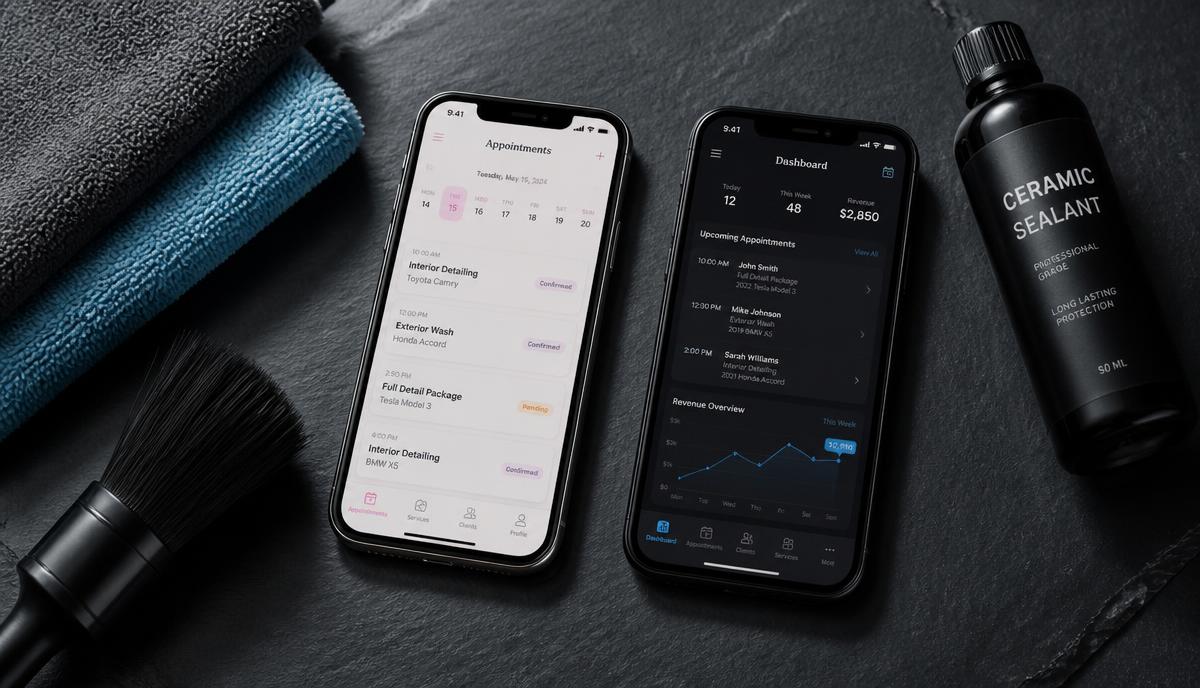
This is one of the things Automate is built for. Your services, your prices, your add-ons, your availability, all presented clearly on a branded booking page where customers can choose what they want and book themselves in. No phone calls while you are mid-job. No evening admin. No ambiguity.
Every valeter we work with who moves from informal pricing to a structured booking page sees the same thing: more bookings, fewer no-shows, and customers who arrive already understanding what they are paying for.
Want a booking page that does this for you?
Automate gives your customers a professional booking experience with clear pricing, online payments, and automated reminders.
The Short Version
If you take nothing else from this article, take these five things:
Price in three tiers. Entry, mid, and premium. Clear differentiation, obvious progression, no confusion.
Your entry-level service is not about profit. It is about getting customers through the door. Price it to be accessible. The lifetime value will follow.
The mid-level sweet spot is £50 to £80. Over half of all bookings on Automate land in this range. This is where you earn your living.
Repeat customers are worth three times what one-timers are. Price for regularity, not just single transactions. Make it easy for people to keep coming back.
Present your prices professionally. A clear booking page with structured packages converts better than a price list in your Instagram bio. Every time.
Get the pricing right, present it clearly, and make it easy for customers to book. That is the formula. The rest is doing great work and letting the results speak for themselves.